Saturday, 8 September 2012

Salts - normal salts, acid salts

Salts are very important to us.

Table 1 Example of salts
Salt
Use
Ammonium chloride
Torch batteries
Ammonium nitrate
Fertilisers
Calcium carbonate
Extraction of iron, making cement, making glass
Calcium chloride
Extraction of sodium, drying agent
Calcium sulphate
Making plaster boards and casts for injured limbs
Iron(II) sulphate
Iron tablets
Magnesium sulphate
Medicines
Potassium nitrate
Fertiliser, gunpowder
Silver bromide
Photography
Sodium carbonate
Making glass, washing powders, water softener
Sodium chloride
Making hydrochloric acid, food flavouring, hospital saline, making sodium carbonate
Sodium stearate
Soaps
Tin(II) flouride
Additive to toothpaste


battery 
Ammonium chloride in a battery

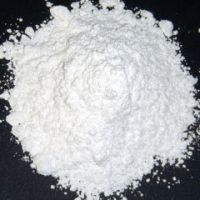
Ammonium nitrate fertilisers
Calcium carbonate
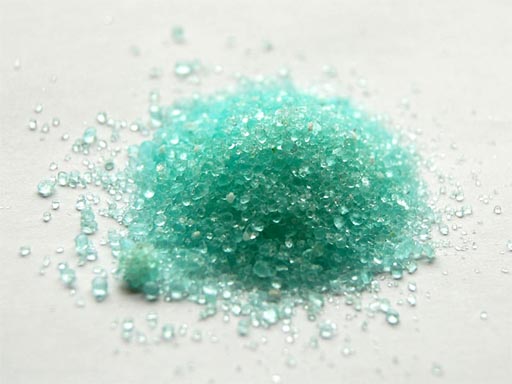
Iron sulphate for making Iron supplement,
also named as ferrous tablet
Magnesium sulphate


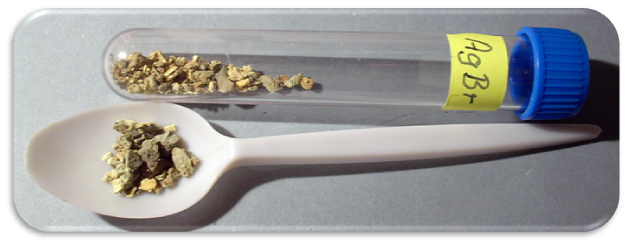
File:Bromid stříbrný.PNG
Silver bromide


Sodium carbonate

Sodium chloride


Sodium stearate

Normal Salts

A Normal salt is formed when all the hydrogen ions(H+) of an acid, have been replaced by metal ions or by the ammonium ions(NH4+), All the salts listed in table 1 are normal salts. 

Normal salts may be soluble or insoluble in cold water.
  • all nitrates salts are soluble
  • all common sodium, potassium and ammonium salts are soluble
  • all chlorides salts all soluble except lead, silver and mercury 
  • all sulfates salts are soluble except lead, barium and calcium
Table 2 Normal Salts
Acid
Type of salt
Example
Carbonic acid H2CO3
Carbonates
Sodium carbonate Na2CO3
Sulfuric acid H2SO4
sulphates
Sodium sulfate Na2SO4
Ethanoic acid CH3COOH
Ethanoates
Sodium ethanoate CH3COONa
Hydrochloric acid HCl
Chlorides
Potassium chloride KCl
Nitric acid HNO3
Nitrates
Potassium nitrate KNO3


Acid Salts

An acid salt is formed where not all of the hydrogen ions of an acid have been replaced by metal ions or the ammonium ions. For examples:
Acids such as sulfuric acid and carbonic acid which have two hydrogen ions per molecule, when only one of the hydrogen ions is replaced with a metal ion, the salts formed still contain hydrogen ions.


Table 3 Acid Salts
Acid
Type of acid salt
Example
Carbonic acid H2CO3
Hydrogencarbonate
Sodium hydrogencarbonate NaHCO3
Sulfuric acid HsSO4
Hydrogensulfate
Potassium hydrogensulfate KHSO4


Saturday, 1 September 2012

Acids


Example of acidic products:

Citric acid in lemon can
conduct electricity
 Carbonated drinks (carbonic acid)

Acetic/ethanoic acid in vinegar


Tomato ketchup
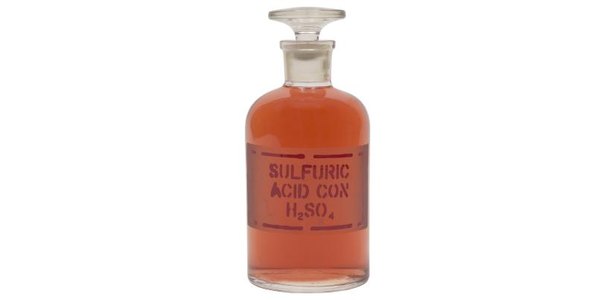
Sulfuric acid, 
a strong acid
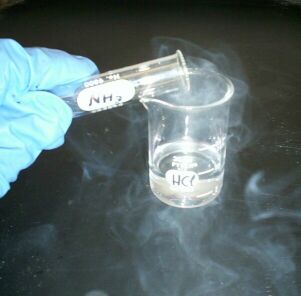
Reaction between hydrochloric acid and ammonia
Hydrochloric acid found 
in stomach digestive juices


Testing with Litmus Paper


Acid turn blue litmus to red


Testing with Universal indicator

To find the out how acidic a substance is, one or two drops of universal indicator is mixed into the substance.

Universal indicator solution
Universal indicator paper/ pH paper


The colour change is matched to a pH scale ranged from 0 to 14 as below. A substance with a pH of less than 7 is an acid. The lower the pH(below 7), the more acidic the substance. One with a pH of 7 is neutral. One with a pH of greater than 7 is an alkaline, the higher the pH(above 7), the more alkaline a substance.


Acids
Molecules Formula
Strong/Weak AcidpH
Hydrochloric acid HCl (aq)Strong acid0 to 1
Sulfuric acidH2SO(aq)

Strong acid1 to 2
Nitric acidHNO(aq)

Strong acid1 to 2
Acetic/Ethanoic acid (vinegar acid)CH3COOH (aq)

Weak acid3 to 5
Citric acid (lemon/lime juice)C6H8O7

Weak acid2.5-6.0
Carbonic acid (fizzy drink)H2CO3 (aq)
Weak acid
2.4
Methanoic acid/ Formic Acid (ant stings)HCOOH /HCO2HWeak acid3.7
Sulfurous acid (acid rain)H2SO3 (aq)Weak acidvaried
Ascorbic acid (vitamin C)C6H8O6

Weak acid4.1


Properties of Acids

  1. taste sour 
  2. soluble in water
  3. corrosive
  4. conduct electricity
  5. react with certain metals and give out hydrogen gas
  6. react with metal carbonates and give out carbon dioxide gas
  7. react with bases to form salts and water
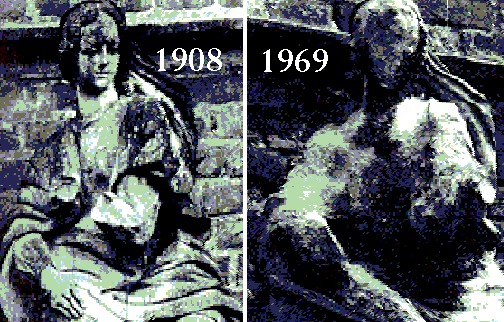
A victim of acid attack


statue.gif (43120 bytes)
Sulfurous acid(acid rain) a weak acid,
when oxidised to sulfuric acid it becomes strong  acid and
 damages the environment quite badly.
 

Hydrogen ions is responsible for the 'acidic' condition

In order to show acidity, the substance must be dissolved in water.  For an example, gaseous hydrogen  chloride, HCl(g), is not acidity but when it dissolves in water an acidic solution is produced.

Strong Acid or Weak Acid

Solubility of the Hions in water indicates the strength of the acid. Strong acid means the acid can easily dissociates(ionises) to produce hydrogen ions in water.

It is important to note that a concentrated acid does not mean it is a strong acid and a dilute acid does not mean it is a weak acid. Concentration of an acid only indicate the proportions of water and acid present in aqueous solution. For examples hydrochloric acid is a strong acid, virtually 100% hydrogen ionised; even a diluted hydrochloric acid is still a strong acid. For the same reason, ethanoic acid found in the vinegar is a weak acid, only partial hydrogen ionised; concentrated ethonoic acid is still a weak acid.

An acid is strong acid if all of its Hions dissociates(ionises) to form hydrogen ions in the water. An acid is weak acid if only small amount of its Hions dissociates(ionises) to form hydrogen ions in the water.

Hydrochloric acid is a strong acid because all the hydrogen chloride molecules break up to form Hions and  Cl ions.

                               water
hydrogen chloride -------------> hydrogen ions + chloride ions

                                water
        HCl (g)        ------------->  H(aq)     +    Cl(aq)


Ethanoic acid (vinegar) is a weak acid because it produces few hydrogen ions when dissolves in water. Only partial of the hydrogens in ethanoic acid dissociate to form hydrogen ions in the water. the hydrogen ions and ethonate ions dissociated will react together to re-form the ethanoic acid molecule again since it is a reversible reaction.


                             water
ethanoic acid           is in equilibrium with     hydrogen ions +    ethanoate ions

                              water
CH3COOH(aq)         is in equilibrium with       H(aq)     +    CH3COO- (aq)